

When your car’s air conditioning fails, comfort quickly disappears. The rising heat makes every drive challenging, especially in traffic or summer weather. A malfunctioning AC isn’t just an inconvenience for vehicle owners; it affects focus, safety, and overall driving experience. Understanding what happens during a professional auto AC repair helps you stay confident, avoid unnecessary expenses, and make informed decisions about your vehicle’s care.
Why Understanding Professional Auto AC Repair Matters
Knowing what to expect during a professional auto AC repair keeps you informed and in control of your vehicle’s care. It helps you recognize fair pricing, quality craftsmanship, and proper diagnostic procedures. With this knowledge, you can avoid unnecessary repairs and spot the difference between expert service and guesswork. Being prepared also reduces stress and ensures your car’s cooling system receives the attention it needs for long-term performance. This awareness empowers you to make confident maintenance choices that protect comfort and value.
What Happens During Professional Auto AC Repair
A professional auto AC repair follows a precise process to find and fix cooling issues efficiently. Every step from inspection to final testing ensures your system performs at its best. Understanding how technicians diagnose and restore your AC gives you clarity and confidence in the service. It also helps you appreciate the skill and accuracy that go into keeping your car cool and comfortable.
Initial Inspection and System Evaluation
A professional auto AC repair begins with a complete system inspection to identify the root cause of the problem. Technicians assess how well the system cools, check pressure levels, and inspect hoses, valves, and filters for damage. This phase helps determine whether the issue lies in mechanical wear, refrigerant leaks, or electrical faults. With a complete evaluation, repairs are accurate, efficient, and cost-effective.
Checking Cooling Efficiency and Temperature Output
The first step in diagnosing an AC problem is testing its cooling efficiency. Technicians measure the air temperature from the vents and compare it to factory standards. If the readings show uneven or warm airflow, it usually points to low refrigerant or compressor trouble. These temperature readings also reveal potential restrictions within the condenser or evaporator. Once the data is gathered, the technician can outline the steps needed to restore proper cooling performance.
Detecting Leaks and Visible System Damage
Leak detection is one of the most crucial parts of AC evaluation because refrigerant loss directly affects cooling strength. Technicians use specialized tools like UV dyes or electronic leak detectors to locate even the most minor cracks or loose seals. Damaged hoses, fittings, or condensers are carefully examined and replaced if necessary. Repairing leaks immediately keeps refrigerant levels stable and prevents future system strain. It also ensures long-term cooling consistency and reduces environmental impact.
Inspecting Cabin Air Filters and Ducts
Cabin air filters affect airflow and air quality, making them essential to efficient cooling. When filters are clogged with dust or debris, air circulation weakens, and cooling drops noticeably. Technicians remove, inspect, and replace these filters to improve comfort and eliminate odors. They also check the ducts for blockage or moisture buildup that could reduce airflow. Regular filter maintenance supports steady performance and better air freshness inside the vehicle.
Detailed Component Testing and Analysis
After inspection, technicians perform individual tests on key AC components to pinpoint internal faults. This deeper analysis targets the compressor, condenser, blower motor, and electrical connections that power the system. It ensures each part operates smoothly under proper pressure and electrical flow. With every component checked, the system regains full functionality and balanced cooling.
Compressor and Clutch Function Evaluation
The compressor is the core of your vehicle’s air conditioning system. Technicians monitor its pressure output and clutch engagement to confirm smooth operation. If the compressor struggles to build pressure or the clutch slips, the unit may be worn internally. Loud noises often signal bearing failure or internal wear. When this happens, replacement is necessary to restore consistent refrigerant flow and reliable cooling power.
Testing the Condenser and Evaporator
The condenser releases heat, while the evaporator absorbs it to cool the cabin air. Technicians check both components for corrosion, debris, or airflow restriction. When fins are bent or surfaces are blocked, heat transfer slows down and cooling weakens. Cleaning and repairing these parts restores performance and prevents excess compressor load. If leaks are detected, replacement ensures safe, long-term operation of the AC system.
Blower Motor and Fan Operation Check
Air distribution depends on a healthy blower motor and fan assembly. Technicians verify speed consistency, sound levels, and power delivery to the blower. A slow or noisy motor indicates worn bearings or electrical resistance. Fixing these issues guarantees smooth airflow through every vent. Proper fan function helps maintain even temperatures across the cabin, creating a more comfortable drive.
Electrical and Sensor System Diagnosis
Modern AC systems use sensors and electrical circuits to regulate cooling. Technicians use diagnostic scanners to test fuses, relays, and temperature sensors. Faulty sensors or wiring interruptions can stop the compressor from engaging or cause inconsistent temperatures. Identifying and fixing these electrical faults returns the entire system under precise control. This step ensures that every component communicates correctly with the vehicle’s climate control module.
Refrigerant Recovery, Vacuum, and Recharge
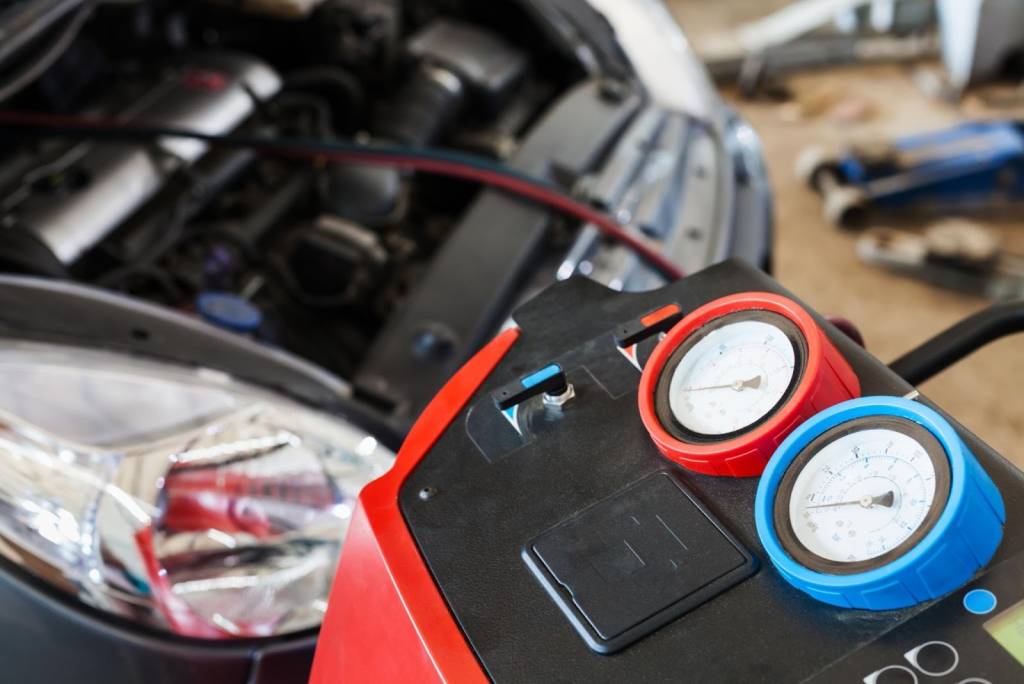
Once damaged components are repaired or replaced, the technician carefully handles the refrigerant process. They recover the old gas, test for moisture, and recharge the system with the correct refrigerant type and amount. This process restores efficiency while following environmental safety standards. Proper refrigerant handling ensures that cooling performance meets manufacturer specifications.
Safe Recovery of Old Refrigerant
Technicians use recovery machines that extract old refrigerant without releasing it into the air. The gas is filtered and stored in certified tanks, preventing contamination and pollution. During this stage, old oil and moisture are removed from the system. This process prepares the AC for a clean recharge and extends component life. Safe recovery also aligns with environmental protection regulations and professional repair standards.
Vacuum Testing and Moisture Removal
Vacuum testing is essential before a new refrigerant enters the system. The process removes air, water vapor, and contaminants that freeze or corrode internal parts. Technicians monitor the vacuum level for stability, confirming the system is sealed correctly. If pressure rises during the test, it indicates a leak that must be fixed. Performing this step ensures a clean, dry environment that supports reliable performance.
Accurate Refrigerant Recharge
After the system passes the vacuum test, it’s recharged with the precise amount of refrigerant specified by the manufacturer. Too much or too little refrigerant can cause poor cooling and compressor damage. Technicians use digital gauges to measure and control the charge accurately. They also add the correct oil balance to protect moving parts. This precision guarantees efficient operation and consistent temperature control.
Testing After Auto AC Repair Completion
Testing confirms that the AC repair was successful and that every part works correctly. Technicians measure temperature, airflow, and pressure under different driving conditions. This step verifies that repairs have restored optimal cooling performance and ensures that the system will remain under continuous use.
Pressure and Temperature Verification
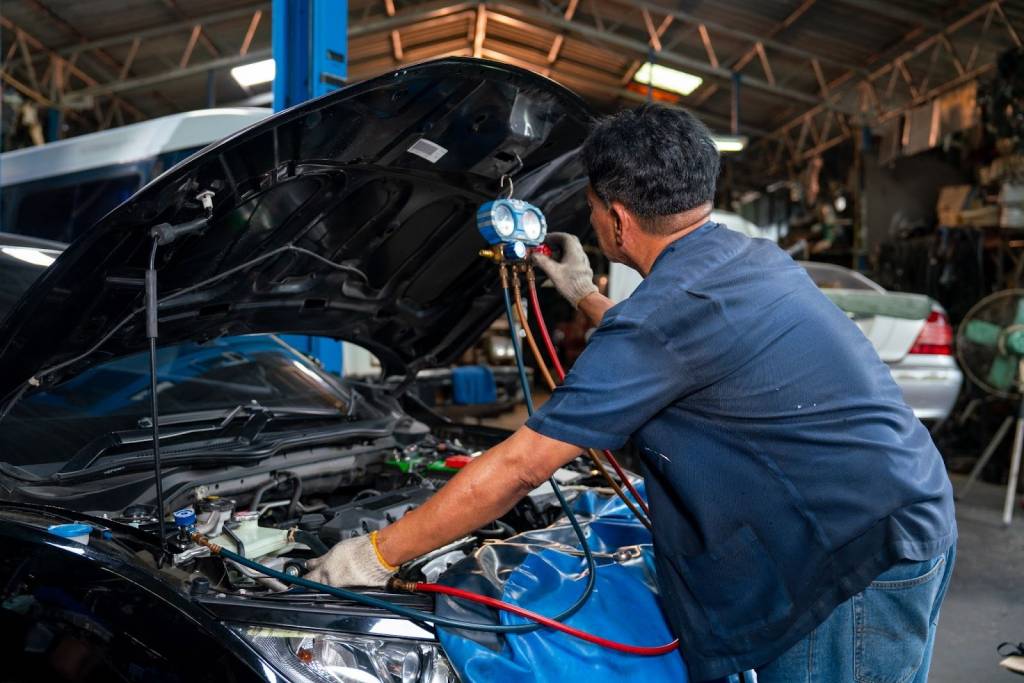
Pressure gauges on both the high and low sides show how refrigerant moves through the system. Balanced readings indicate that the compressor, condenser, and valves work properly. Technicians also compare vent temperature readings to manufacturer standards. Any imbalance is adjusted before final approval. These tests confirm the AC’s reliability and readiness for daily use.
Checking Airflow and Vent Output
The airflow test measures how well cooled air circulates throughout the cabin. Uneven airflow usually signals a clogged duct or a weak blower motor. Technicians use anemometers to ensure air reaches every vent with equal force. They also confirm that defrost and recirculation modes respond correctly. Proper airflow means passengers experience steady cooling in all seats.
Identifying Unusual Noise and Vibration
Noise and vibration tests catch hidden problems that visual checks can miss. If rattling or hissing sounds occur, they may point to loose fittings or refrigerant leaks. Technicians tighten connections and reinspect for leaks immediately. Smooth, quiet operation signals that installation was done correctly. This level of precision prevents early component wear and repeated service visits.
Replacement Parts and Quality Control Measures
High-quality replacement parts ensure that the repaired AC system performs like new. Technicians use only OEM or top-tier aftermarket components approved for your vehicle. These parts match factory standards for durability and fit. Strong quality control protects both your comfort and your investment.
Installing Durable, Certified Components
Reputable auto repair shops use certified parts to maintain system integrity. Inferior materials often fail quickly, leading to leaks or poor cooling. OEM parts guarantee the same performance as factory installations. Each part is pressure-tested before installation to confirm compatibility. Using durable materials keeps the AC system reliable and efficient over time.
Performing Leak Checks After Installation
After installing the parts, technicians perform another leak test using pressurized nitrogen or specialized detectors. This step confirms that new seals and hoses hold firm under stress. Detecting leaks early avoids future refrigerant loss and compressor wear. The system is retested until no pressure drop occurs, ensuring the repair’s longevity and your peace of mind.
Final Quality Verification and Report
Before the vehicle is released, technicians document every step of the repair. The final inspection includes refrigerant pressure, air temperature, and compressor operation. This report provides proof of service quality and compliance with industry standards. It also helps track future maintenance schedules. Complete transparency builds trust between customers and technicians.
Cost Estimates and Repair Duration
Auto AC repair costs vary depending on the cause of failure, labor time, and part quality. Professional shops give upfront quotes to avoid surprises later. Based on the repair scope, they also estimate how long the service will take. Clear communication keeps the process smooth from diagnosis to delivery.
Understanding Auto AC Repair Costs
Minor repairs, such as filter replacements or refrigerant recharge, are usually affordable. However, replacing compressors or condensers increases the total cost. Technicians explain each charge, including labor rates and parts pricing. Transparent estimates help customers make confident decisions about their repairs. Reliable shops value honesty as much as craftsmanship.
Average Time Needed for Auto AC Repairs
The duration depends on the system’s complexity and damage level. Simple recharges can take under an hour, while compressor replacements may take several. Shops provide estimated completion times before work begins and update customers if extra steps become necessary. This communication helps drivers plan without uncertainty.
AC Maintenance and Post-Repair Guidance
After repair, technicians advise keeping the AC performing well. Simple habits, like regular system checks, make a big difference in longevity. Proper care reduces the need for major repairs later. Maintenance awareness saves money and keeps your car consistently cool.
Running the AC Regularly
Technicians recommend using the AC at least once weekly, even in cold weather. This routine circulates refrigerant and keeps seals lubricated. It also prevents moisture buildup that can cause mildew or odor. Regular use keeps the compressor active and responsive, supporting long-term cooling efficiency.
Replacing Cabin Filters on Schedule
Clogged filters restrict airflow and reduce AC performance. Technicians suggest replacing them every 12,000 to 15,000 miles or as your vehicle manufacturer recommends. Clean filters maintain good air quality and efficient cooling. Some filters also reduce allergens and pollutants inside the car. Following this schedule helps the AC system breathe freely.
Tracking Warranty Coverage
Professional repair centers usually provide warranty coverage for both parts and labor. This assurance protects you if the repaired component fails again within a set period. Technicians explain warranty terms clearly and keep service records updated. Some shops also offer complimentary follow-up inspections. Reliable warranties reflect confidence in craftsmanship and part quality.
Why Choose Professional Auto AC Repair Services
Professional auto AC repair services deliver accuracy, safety, and performance that DIY fixes can’t match. Certified technicians use diagnostic tools designed for your vehicle. Their precision prevents wasted time and repeated issues. Choosing experts means better comfort, dependability, and long-term savings.
Advanced Diagnostics and Skilled Technicians
Experienced technicians rely on modern diagnostic scanners and pressure tools to locate faults quickly. These instruments provide exact data on temperature balance, refrigerant flow, and electrical function. Quick identification means faster, more precise repairs. Skilled professionals handle each task with expertise that minimizes risks. Their accuracy restores performance the right way the first time.
Long-Term Savings and Reliable Cooling
A professionally repaired AC system runs efficiently, lowering strain on the compressor and electrical components. Balanced refrigerant levels and clean filters help the system maintain steady cooling. This reliability saves money on fuel and future repairs. Drivers enjoy consistent comfort even in high temperatures. Choosing professional care keeps your AC dependable for years.
Restore Peak Comfort Through Trusted Auto AC Repair
True driving comfort comes from knowing your vehicle’s cooling system performs flawlessly. A trusted auto AC repair doesn’t just fix the problem; it renews your car’s ability to keep every ride calm, fresh, and enjoyable. When your AC begins to struggle, acting promptly with professional help prevents further damage and restores confidence behind the wheel. The sooner you invest in expert care, the faster you reclaim comfort that lasts every mile.
Stay ahead of every season with the Monkey’s RV & Auto Repair blog—where trusted experts share smart, straightforward advice for lasting vehicle comfort.